STRETCHING AND SQUASHING DRAGONS
(AND NOT IN THE CUTENESS AGGRESSION WAY… OR MAYBE JUST A LITTLE IN THE CUTENESS AGGRESSION WAY)
WEEK 2 BLOG POST
Davina Jou
Here’s an arguably uncontroversial claim: dragons are pretty freaking cool.
I’ve known this since I was in second grade, consuming the masses of dragon content at my disposal. How to Train Your Dragon, Eragon, Spirited Away, Lord of the Rings… there’s something enticing about either befriending or outsmarting this powerful, divine creature with control over multiple elements. In a way, you are pretty darn cool for coming close to a dragon.
Chinese dragons, at least in my childhood, lacked that kind of intimacy. I saw them all the time in temples and artworks, and I knew they were important – they were representative of ancient emperors, after all. But that made them less fun to play with. There’s too much baggage. I can invent situations for Toothless and make him fly around and do cool stuff, but I felt weird doing that with a Chinese dragon because then I’d be messing around with imperial respect and cosmology. It was easier to just not and draw a Night Fury that’s purple and teal with space powers instead.
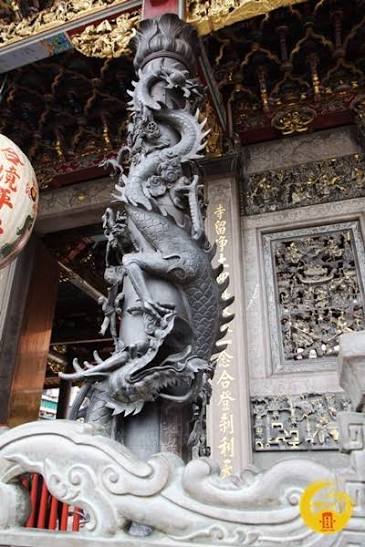
Source: Facebook
Something similar might have happened with the National Palace Museum (NPM) in Taiwan. Generally, everyone knows how important the NPM is. It is a bastion of Ming – Qing dynasty imperial artwork; a guardian of some of the most iconic old court symbols worldwide; and its avoidance of the Cultural Revolution’s iconoclasm allowed for a continuous institutional preservation of imperial court aesthetics and artefacts. But because it’s too important not to revere, it may have also become something everyone nods at, and nobody actually interacts with.
I volunteered as a junior docent at NPM for three years– one thing I heard near constantly is how relieved the guests were that there was someone there to explain everything for them. Otherwise, they had no idea how fun the archive could be. Which is something all museums and archives struggle with, right? How do you make the little label in front of the painting or the text on the wall that everyone crowds over less impersonal? Certainly, it can’t be more personal than a bright-eyed teenager who has walked this route a dozen times, speaking casually and cracking jokes. Not to say one is better than the other – both are necessary – but it also highlights how accessibility isn’t just “is it available?” NPM’s Open Data program is great, but what regular curious peruser will commit to digging through its depths? Different ways of knowing are what I’m referring to here – an archive for the everyman, interested but not invested yet, that requires something vernacular and easy to enter.
In class, we talked about the undervaluing of certain documents and archives because the “dominant rhetoric made them [as in, family/community members] believe these documents/work were not useful.” I think the opposite problem happened here: where something is so well-known as important, the less intimate it is perceived.
This cultural anxiety is what inspired me to develop this archival project. In “Can Culture be Copyrighted?”, Professor Michael F. Brown criticises the reverential and placating attitude people hold towards cultures different from their own, in which they unthinkingly bend to those cultures’ demands. Doing so treats culture like it is a “fixed and corporeal thing” when it’s actually something malleable that can “change through time and freely influence and are influenced by social interactions with other people” (197). Deferring to a culture because you want to show respect without reckoning with the motivations, assumptions, and prejudices that come with those demands isn’t real respect, nor does it protect you in spirit from the dreaded cultural appropriation. It’s still objectification — culture as an extractable thing you can either take or not, instead of a process that only stays alive through continued contact and interpretation (205). Such avoidance just saves you from having to do the harder work of learning enough about a culture to engage with it on real terms. The goal of this project, then, would be to push back against this cultural freezing, whether it’s worship for dynastic Chinese dragons or villainisation for Christian European ones.
This project will run on three scholarly threads. We’ve covered Brown's work, whose theory on cultural property law and sociology shaped the goals behind this project. The archive and gallery that follow put two dragon chronologies in dialogue, which is where this project engages with comparative mythology, folklore studies, and work on transculturalism. And the companion analysis in Behind the Scenes, comparing NPM's institutional metadata against AO3's decentralised folksonomy, turns archival appraisal theory — what the National Archives calls "intrinsic value," what Trouillot calls silence — into case study data for the project's own metadata choices.

Source: 覺風佛教藝術文化基金會
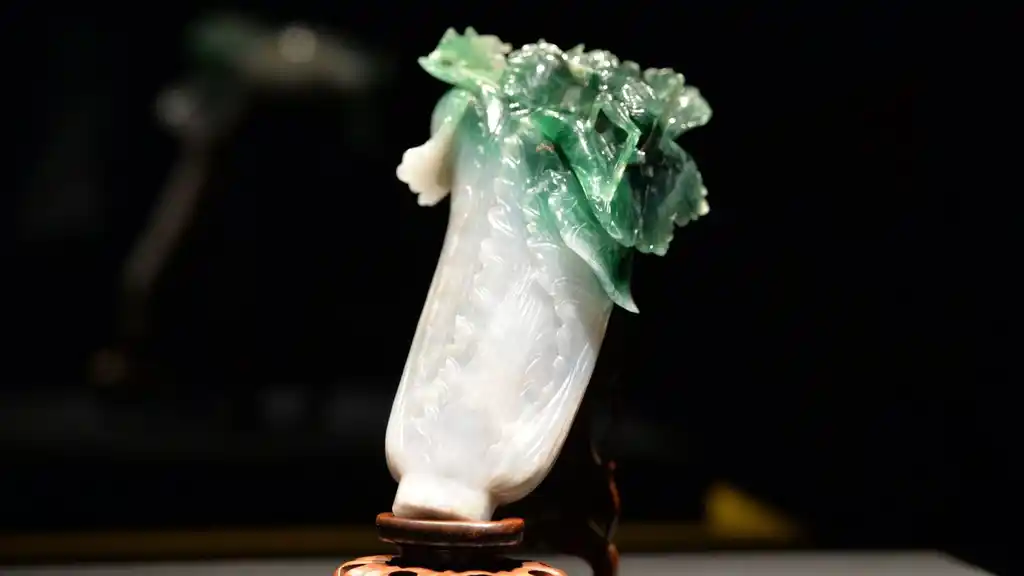
Source: mezha.net
Furthermore, I aim to engage with two audiences:
General audiences who enjoy fantasy media: who like dragons but have very little history background. For them, this would be a fun way to learn about European and Chinese history through the lens of something they’re already interested in.
People who know the history but are scared to engage with the objects within it. For them, this is a low-stakes, narrative way into material they may treat as too weighty to touch. In the close reading archive specifically, the artefacts selected are meant to act like narrative turning points, able to be read like a story rather than an academic catalogue. It encourages them to approach this history like a story they can interpret and critique.
In the end, maybe by understanding them better, one can also ‘play’ with dragons more freely, like how an artist who understands proportions allows them to stretch and squash to their heart’s delight.
