EPILOGUE: PROJECT MOTIVATION


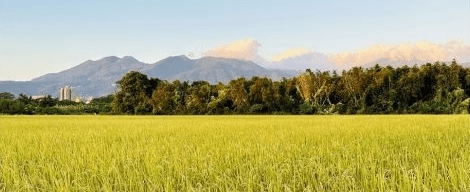
pictured: wufen river, 2024-2026, taken while volunteering
Funnily enough, its preservation was technically an accident. Just over fifty years ago, Wufengang was just known as the downstream of Shuangxi river, connecting it to Keelung River. However, during a 1975 channel-straightening project that connected the Shuangxi River (雙溪) directly into Keelung River (基隆河), the Wufengang section was blocked off with floodgates to irrigate the local farmland. Because it was bypassed rather than developed, the river was allowed to flourish organically. Now, it’s the only remaining stretch of river in the entire Taipei Basin whose banks have never been concreted, and the last natural river bend in Taipei City — a rarity in one of the most heavily urbanized regions in Taiwan!
Nvidia recently announced they were building an R&D Centre in Taipei, prompting proposals to pave over the OECM*-certified river to expand the Beitou technology park. In June, Nvidia’s arrival has spurred the government to recategorise the Wufangang are from farmland to "Urban and Rural Development District - Category 1" (城鄉一), allowing infrastructure to be developed — and if there’s no more farmland, there’s nothing stopping the local government from concreting Wufengang River. My hope with this project is that by using Silicon Valley — a respected technology hub amongst Taiwanese people — and its relationship with environmental conservation as a reference point, I can illustrate that wetland conservation and tech development are not mutually exclusive.
Throughout this project, I was delighted to find even more similarities than I expected between Wufengang River and the South San Francisco Bay. Both can be understood as shared community resources, due to their cultural aura and environmental significance.
*OECM stands for "Other Effective Area-based Conservation Measures," a category defined by the UN Convention on Biological Diversity for ecological sites that deliver long-term, effective biodiversity protection without being formal legal nature reserves. Wufen Harbour River received their certification on March 25, 2026!
*Below: photos from a tree restoration project! We were attempting to heal this tree from brown root rot disease, also known as "tree cancer"
Throughout high school, I volunteered at the Beautiful Waterways Association – an environmental preservation nonprofit. I assisted primarily with the Wufengang River (五分港溪), the last remaining natural river bend in Taipei.
The San Francisco Bay was called a public resource for another reason: recreational blue spaces were demonstrated to be beneficial to community health and mental well-being. Having access to such clean, beautiful spaces is very important for your biophysicality. It’s a shame, then, that Wufengang is as hidden as it is. Despite being in one of the densest parts of Taipei, the river is only accessible through a narrow road in between two large automobile shops, off the side of a major road. If you weren’t looking for it in particular, very few people would stumble upon it naturally. As an environmental-education volunteer said in Rhythms Monthly’s 337th issue (經典), "a lot of the students who live near here have never actually seen a mudskipper or a fiddler crab in person!" (“住 在 附 近 的 學 ⽣ , 根 多 部 沒 親 眼 ⾒ 過 彈 壞 ⿂ 或 招 潮 蟹 呢 !“ ) If Beitou-Shilin's expansion proceeds as proposed, the community that needs this space most — specifically because it lives in the most intensely developed area around — will find blue spaces even more inaccessible than before.
2025 wheatfield baseball (田間野球賽)
Japanese colonial period (日治時代)


Just like the Bay, Wufengang wasn’t empty before rapid development. As it was part of a river network that stretched 86.4 km, all the way to Yangmingshan Mountain, Indigenous tribes used it as their rapid highway to transport resources. Specifically, Indigenous Ketagalan (凱達格蘭族) and Basay (巴賽族) used the river to transport sulphur that they harvested from modern-day Beitou (北投) and Jinbaoli (金包里), trading it with external merchants (like the Chinese, Spanish, and Dutch) long before colonial development. Fun fact: the name Beitou derives from the Ketagalan word Patauw (meaning "place of witches" or "land of sorcery"), inspired by the dramatic sulphur vapours and geothermal activity! However, after the development of rail transport, river transportation was largely forgotten.
Furthermore, according to the Tamsui Subprefecture Gazetteer (淡水廳志), a stone tablet strongly indicates that Qilian (唭哩岸) was the first village Han people established in the Taipei area (“淡水開發從唭哩岸始”). Ming-Qing-era migrants from Zhangzhou and Guangzhou were blown by strong winds into Wufen Harbour, and decided to settle down in the area. It also notes that local Cishen Temple (廟宇/慈生宮) was founded around 360 years ago, implying that Han people have been present in the area since ~1666.
In the Wufengang wheatfields, it’s more likely than not you’re standing right where your ancestors stood more than three hundred years ago. Save the Bay often framed the Bay as a public inheritance and not simply property available for landowners to fill —this allowed people to see Bay protection as relevant even if they were not environmentalists. Applied to Wufengang, this appeal holds even more water. The river holds the memories of a culture and ethnicity’s origins. Surely that should hold more significance than a road or concrete building?
"In the old days, water rights were as good as a treasure — wherever the waterway went, the farmland followed, and the wealth followed too. People often came to blows fighting over water sources.” Gesturing toward the riverbank, he added, "Our ancestors came ashore right here, arriving by sailboat." — Cai Cailin (board director of Cishen Temple, age 70, recounting settlement history)
「以前水權就等於財庫,水路到哪裡,田地就到哪裡,財富也就到那裡,人們常因搶奪水源而大打出手... 先祖就是乘著風帆而來這裡登岸的。」— 蔡財林 (董事)
↟𖠰˚☀︎ᨒ↟𖠰 ˚☀︎
Just like the Bay, Wufengang’s existence prevents floods from damaging the urban area surrounding it. It is also located in a flood-risk area. Similarly, as the only natural river bend in Taipei City, Wufengang has strong ecological significance. A 2023 biodiversity survey indicated a rich assemblage of life along the creek’s banks, reed beds, and irrigation channels. This includes:
215 bird species (across 80 families), 8 mammal species, 14 reptile species, 29 amphibian species, 29 butterfly species, and 34 dragonfly/damselfly species.
Symplocos buergeriana/ "spike-flowered checkerboard" (穗花棋盤腳): Does this sound familiar? If so, good job paying attention — this flower is the floating menu you’ve been using throughout this site! It’s rated “Vulnerable” on Taiwan's Red List of Vascular Plants, indicating it faces a high risk of extinction in the wild. Wufenkang is one of its native habitats — two of its wild trees there are registered as Protected Trees of Taipei City (#4611, #4612).
Mauremys reevesii/reevs’ turtle (斑龜): rated “Critically Endangered” on the IUCN Red List; needs sandy/earthen banks (which Wufenkang still has) to nest.
Black-eared kite (黑鳶), crested goshawk (鳳頭蒼鷹), and mountain hawk-eagle (鷹鵰): raptors attracted to the intact farmland–forest landscape.
Native amphibians, including the Taiwan-endemic Zhangixalus arboreus (Temple tree frog, 面天樹蛙)
These are the creatures that are at stake —what needs to be protected. The historic tracking of the Bay’s ecology both serves as a useful sample for how the restoration of Wufengang can be documented, and a reminder of the realities of ecosystem rehabilitation.


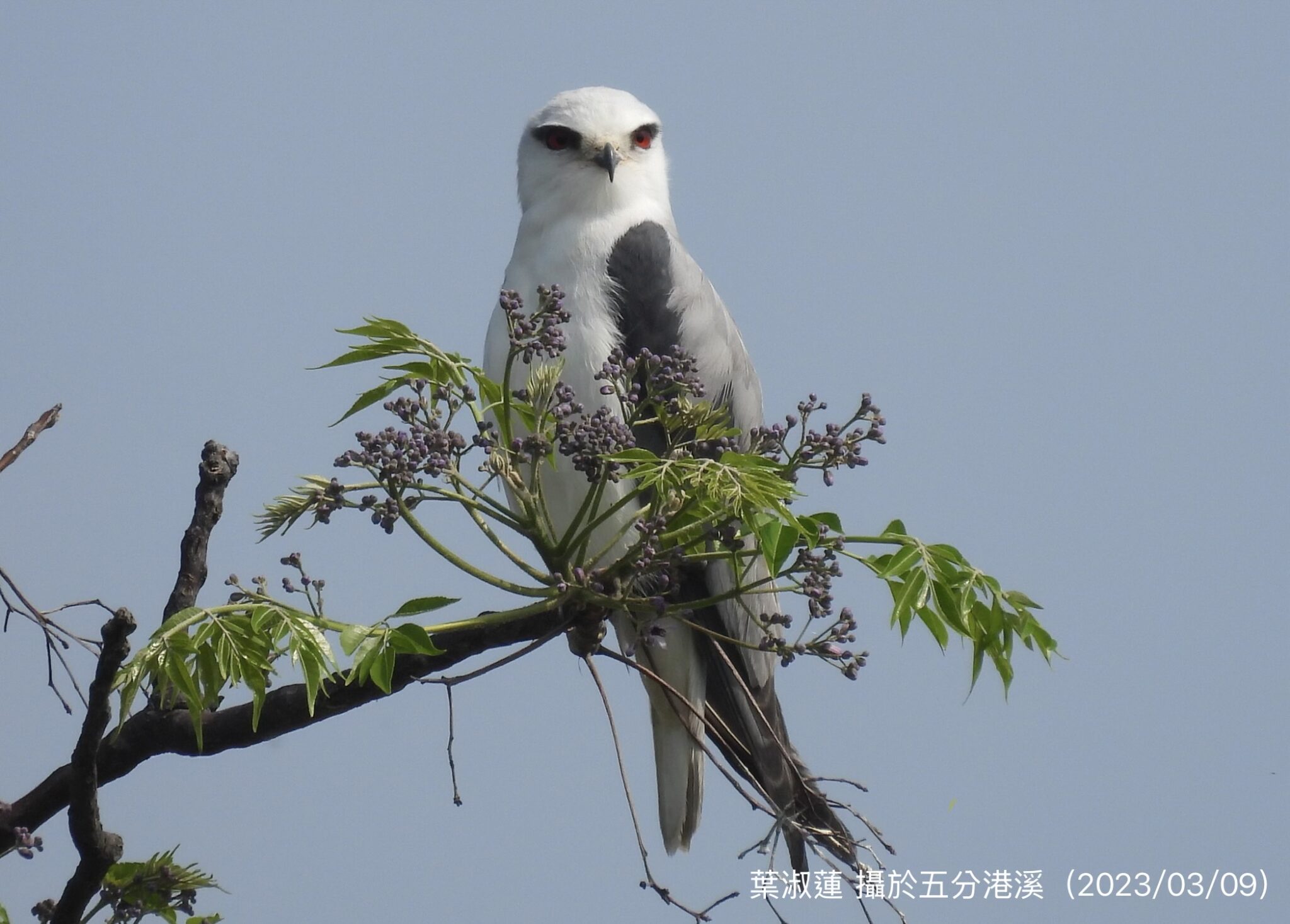
Pictured (L—> R, Top —> down): spike-flowered checkboard, reevs' turtle, temple tree frog, black-eared kite
Read more about Wufengang's ecology here: https://bwataipei.org/category/biolog/
While I don't know what Wufengang's future will look like, this project has shown me that this fight I feared, where saving the river depends on convincing a company to be generous, isn't the only version available. San Francisco Bay didn't wait for tech companies' permission to inspire change —its wetlands were worth saving because they filtered water, held back floods, and gave hundreds of species somewhere to live, long before any developers decided to build beside them. That case for Wufengang would also be true even if Nvidia (or other technology campuses in the Beitou-Shilin area) never adopted a single sustainable design choice.
But it's also true that they don't have to choose. Google's water-recycling system saves millions of gallons and an entire utility bill every year. A campus that keeps trade secrets inside its perimeter also, incidentally, keeps a wetland alive along its edges. None of that required philanthropy; it just required someone noticing the economic incentives already present. If that argument moves a planning committee faster than a mudskipper or a three-hundred-year-old history can, I'll take it — at the end of the day, I'd just like Wufengang to still be there.
This project began with a quote from a BWA volunteer calling this river a gift the gods gave to Taipei. I don't know yet whether my generation will get to keep that gift, or if the presence of a data centre will determine that it wasn't worth keeping. What I believe — and hope this project shows — is that it was never as forced a choice as we've been told it is.
↟𖠰˚☀︎ᨒ↟𖠰 ˚☀︎
